the inverview #4
Unlocking the Secrets of Soil: Bulgaria’s Open-Air Laboratory and AnaEE-ERIC’s Quest for Sustainable Agriculture

A map literally highlithing the soil types of Bulgaria, presented by Professor Irena Atanasoova of ISSAPP.
Nestled in the heart of Bulgaria’s agricultural landscape, the Institute of Soil Science, Agrotechnology and Plant Protection “N. Poushkarov” is a hub of innovation where scientists are working to unravel the mysteries of soil—one of Earth’s most vital yet underappreciated resources.
As part of AnaEE-ERIC’s network, the institute’s Bozhurishte and Tsalapitsa Open Air Platforms serve as living laboratories, where researchers study the intricate relationships between soil health, crop productivity, and climate resilience.
Managing an open-air research platform like Bozhurishte and Tsalapitsa is a delicate balancing act. “Timing is everything,” explains the facility’s team. Soil cultivation, fertilization, and plant protection must align perfectly with crop growth cycles and ever-changing weather conditions. But nature doesn’t always cooperate. “Protecting experiments from storms, floods, and droughts is just as critical as the research itself,” they note. The team’s expertise spans plant diseases, pest control, and soil chemistry, ensuring that every trial adheres to strict scientific protocols.
The platform is equipped with advanced technologies, including rainout shelters, soil moisture sensors, and meteorological stations, allowing researchers to simulate real-world conditions with precision. “We’re not just growing crops—we’re studying how entire ecosystems respond to stress,” says the team. Their work bridges the gap between controlled lab experiments and the complexities of real-world agriculture, providing data that is both reliable and actionable for farmers, policymakers, and scientists.
Soil Under Threat: The Race for Solutions
Bulgaria’s soils are facing mounting pressures. “Water retention is declining,” warns Prof. Irena Atanassova, a leading soil scientist at the institute, and the Contact point for the Bulgarian Node of AnaEE-ERIC. “Without adequate moisture, nutrients become immobile, and crops suffer.” The threats are multifaceted: erosion, pollution, loss of organic carbon, and desertification are all taking their toll. “In Europe, nearly 30% of soils are eroding. In Bulgaria, erosion and carbon loss are among our biggest challenges.”
Climate change only exacerbates these issues. “We need drought-resistant crops, smarter irrigation, and sustainable practices to cut emissions and preserve biodiversity,” Atanassova emphasizes. Her research focuses on developing strategies to improve soil fertility and crop resilience, particularly through optimized fertilization techniques. “Our goal is to translate science into practical solutions for farmers—helping them adapt to a changing climate while protecting the land for future generations.”
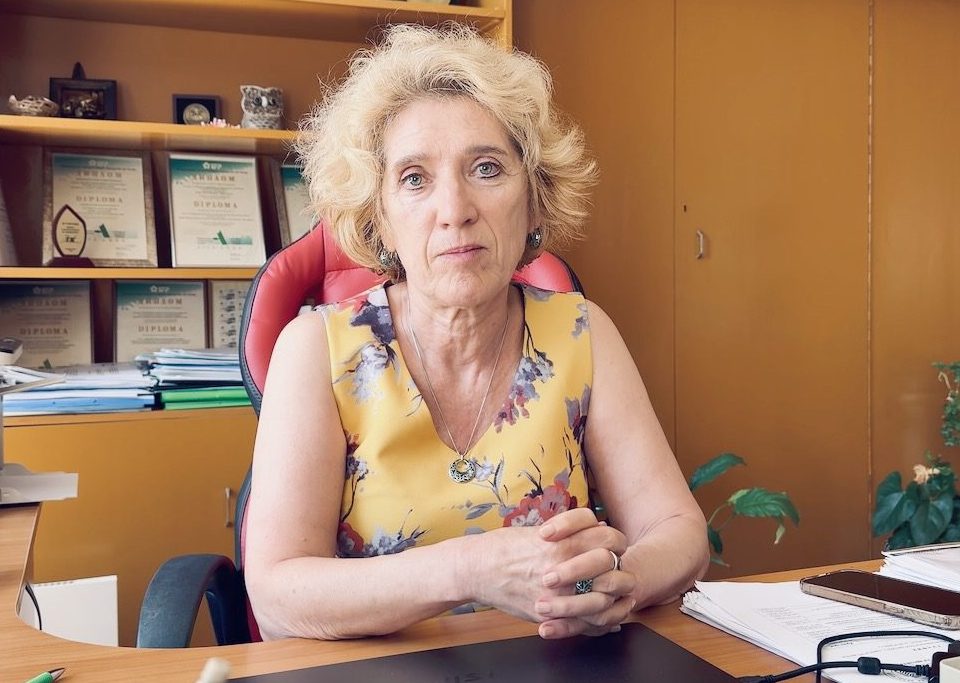
“The soil strategy and the new law on soil is very much related to the United Nations sustainability goal number 15 – to keep life on earth”
– Prof. Irena Atanassova
The Future Beneath Our Feet
At Bozhurishte/Tsalapitsa, AnaEE-ERIC’s scientists are currently investigating how different fertilization methods impact both crop production and long-term soil health. “We’re not just looking at yields,” Atanassova explains. “We’re studying how to maintain soil fertility, reduce environmental impact, and ensure food security in a warming world.”
As the sun sets over the fields, it’s clear that the answers to some of agriculture’s biggest challenges lie beneath the surface. Through collaboration, innovation, and a deep commitment to sustainability, AnaEE-ERIC and its Bulgarian partners are working to unlock the secrets of soil—and secure the future of farming.
Contributors:
Prof. Irena Atanassova | Assoc. Prof. Maya Benkova | Prof. Eng. Maria Ivanova, PhD
This article is part of AnaEE-ERIC’s series on cutting-edge ecological research across Europe.
Explore AnaEE-ERIC’s Bulgarian Node | Discover Our Research Facilities.
Quick Links
Contact info
Other
Newsletter
Subscribe to our newsletter for funding opportunities, publications, events and other ecology research news.
Copyright © 2025. All rights reserved.