• About
    • AnaEE in a nutshell
    • Our network
    • Our team
    • Jobs
    • Governance
    • Become a Member
  • Services
    • Facilities
    • Apply and access
    • AnaEE & API
    • Partnership
  • Funding & EU projects
  • Science & Impact
    • Science and impact
    • Publications
    • Success stories
  • News, events & resources
    • News
    • Event calendar
    • Science Conference 2026
    • All documents
    • Governance documents
    • Media centre
  • Contact

Press Release

AnaEE-ERIC at EGU 2026: gain visibility through our community

January 7, 2026

The AnaEE Facility Manager community is warmly invited to submit abstracts that showcase the special role of AnaEE-ERIC in advancing research…

Read More

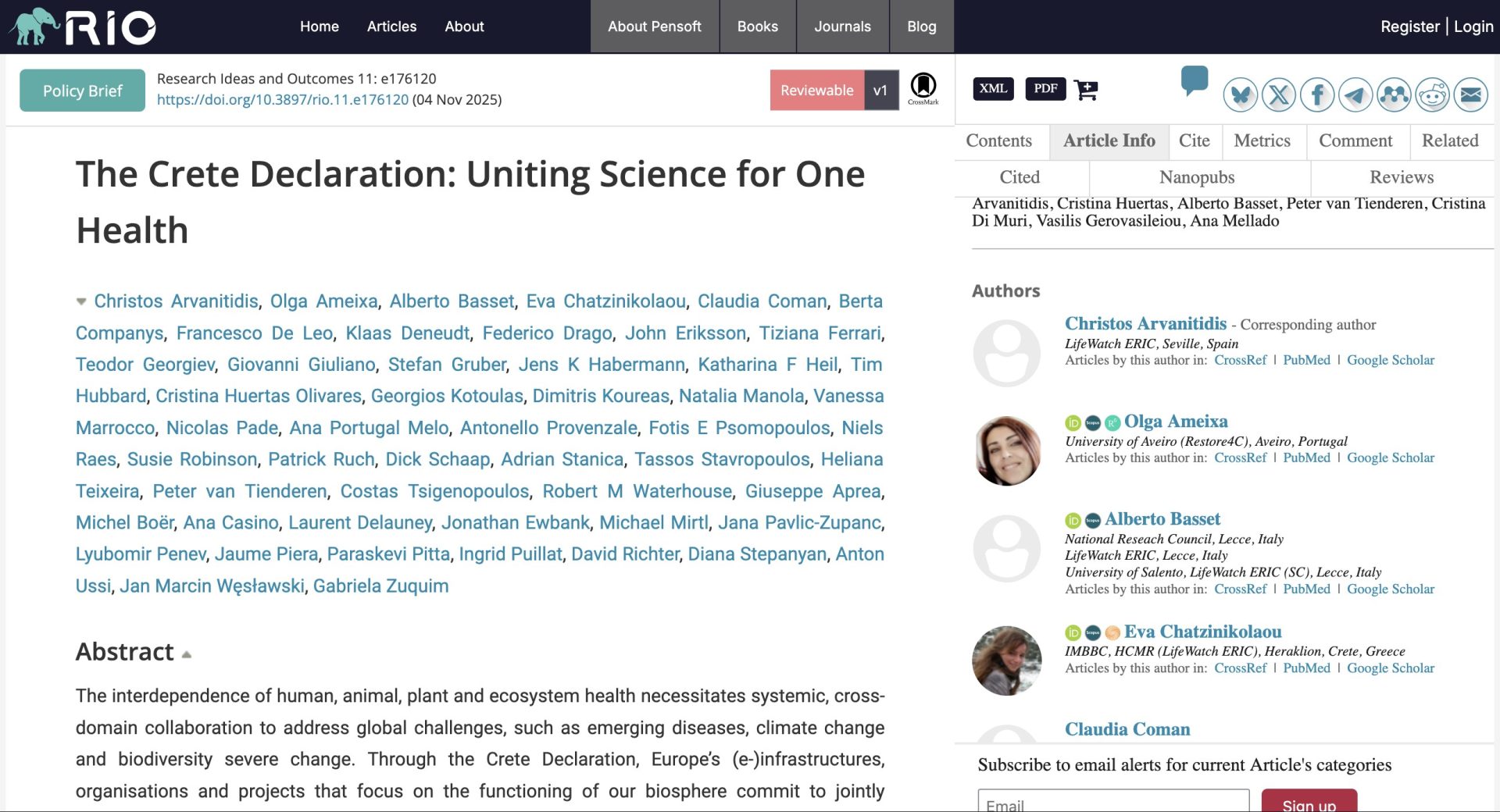
AnaEE-ERIC Contributes to Landmark Crete Declaration for World Science Day

November 10, 2025

On World Science Day for Peace and Development, AnaEE-ERIC proudly announces its contribution to the Crete Declaration,…

Read More

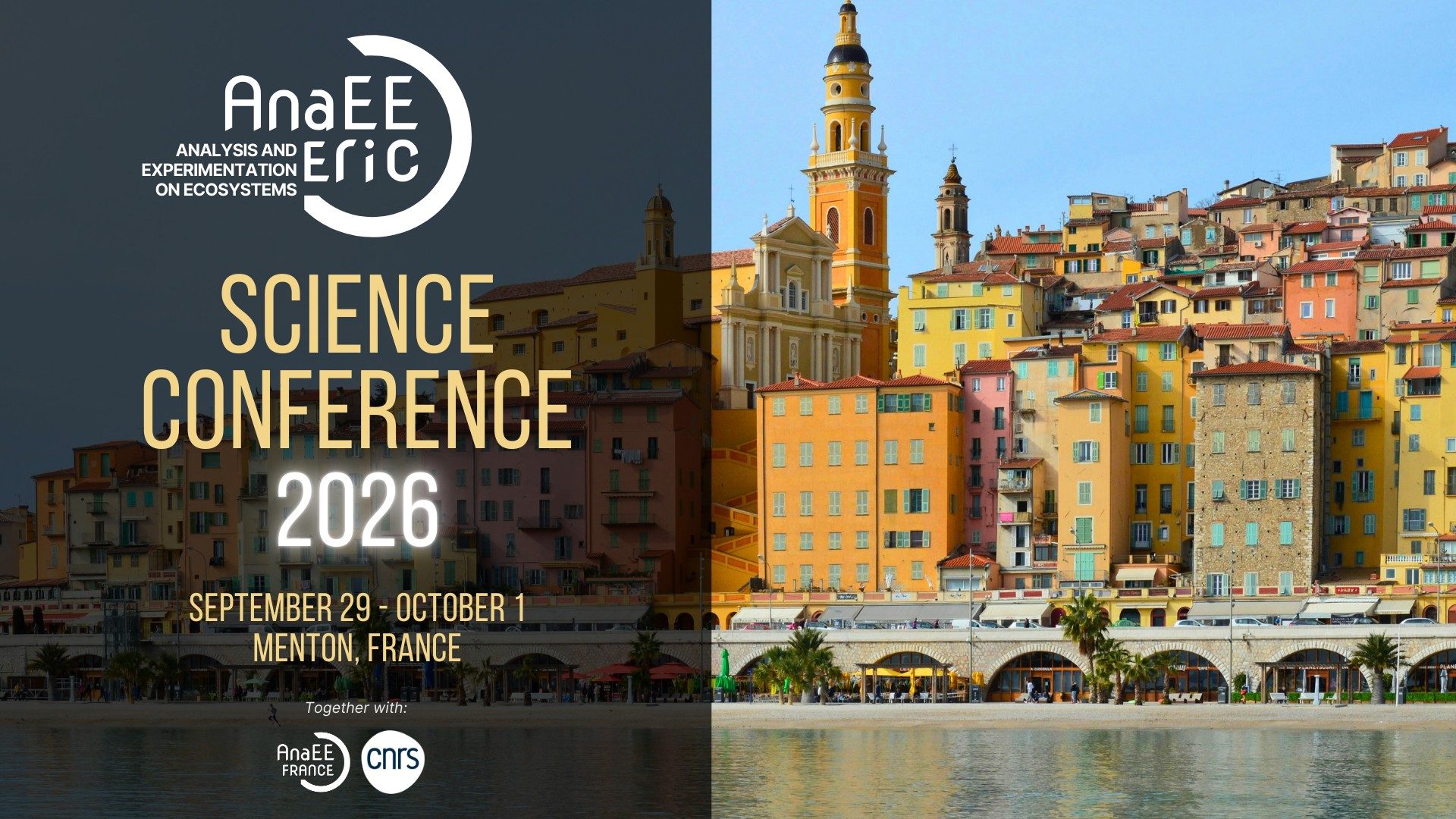
AnaEE science Conference September 2026

September 23, 2025

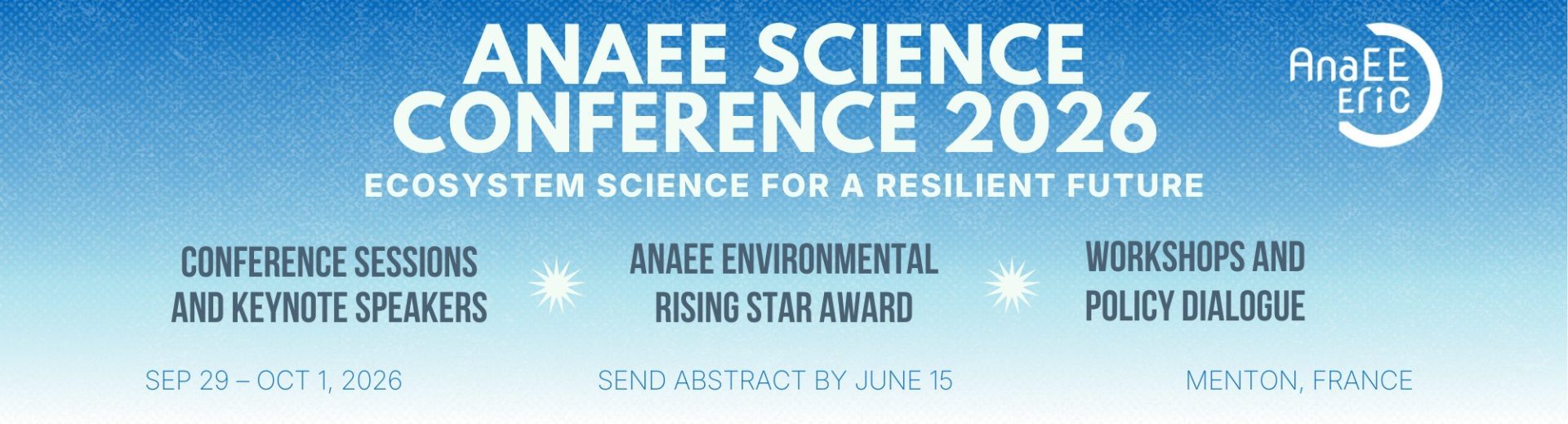
Welcome to the 2nd AnaEE Science Conference: Ecosystem Science For a Resilient Future SEPTEMBER 29 – OCTOBER…

Read More

Jørgen E. Olesen listed as one of Denmark’s most cited experts in 2024!

March 19, 2025

Jørgen E. Olesen, scientific representative of Denmark at the AnaEE-ERIC Assembly of Members, has been listed as…

Read More

ERIC-Forum Annual Meeting 2025: Key Takeaways

February 20, 2025

On January 28–29, representatives from the ERICs, policymakers, and invited stakeholders convened for the ERIC Forum Annual…

Read More

Quick Links

Home
About Us
Events
Contact
Members Page (login)

Contact info

AnaEE-ERIC – Central Hub
1 avenue de la Terrasse
91190 Gif-sur-Yvette
AnaEE Science
Conference

Other

Legal Notices
FAQ
LS-RI
ENVRI

Newsletter

Subscribe to our newsletter for funding opportunities, publications, events and other ecology research news.

SUBSCRIBE

Copyright © 2025. All rights reserved.

Manage Consent
To provide the best experiences, we use technologies like cookies to store and/or access device information. Consenting to these technologies will allow us to process data such as browsing behavior or unique IDs on this site. Not consenting or withdrawing consent, may adversely affect certain features and functions.
Functional Always active
The technical storage or access is strictly necessary for the legitimate purpose of enabling the use of a specific service explicitly requested by the subscriber or user, or for the sole purpose of carrying out the transmission of a communication over an electronic communications network.
Preferences
The technical storage or access is necessary for the legitimate purpose of storing preferences that are not requested by the subscriber or user.
Statistics
The technical storage or access that is used exclusively for statistical purposes. The technical storage or access that is used exclusively for anonymous statistical purposes. Without a subpoena, voluntary compliance on the part of your Internet Service Provider, or additional records from a third party, information stored or retrieved for this purpose alone cannot usually be used to identify you.
Marketing
The technical storage or access is required to create user profiles to send advertising, or to track the user on a website or across several websites for similar marketing purposes.
  • Manage options
  • Manage services
  • Manage {vendor_count} vendors
  • Read more about these purposes
View preferences
  • {title}
  • {title}
  • {title}

REGISTER NOW

AnaEE-ERIC’s 2nd International Science Conference brings together researchers and policymakers to tackle critical ecosystem challenges through 7 thematic sessions featuring distinguished speakers listed below. The conference spans experimental approaches to global change ecology, forest and agricultural resilience, aquatic-terrestrial interactions, and innovative data integration methods.

more information

List of AnaEE member universities/institutes

Our network brings together leading research institutions, universities, and organizations from across Europe, united by a shared commitment to advancing ecosystem science. Each member contributes unique expertise, facilities, and perspectives, creating a powerful collective capability that no single institution could achieve alone.

  • Belgium: University of Antwerp, University of Hasselt, University of Liége
  • Bulgaria: Institute of Soil Science “Nikola Poushkarov”
  • CIHEAM
  • Czech Republic: Czech Globe
  • Denmark: University of Aarhus, University of Copenhagen, Roskilde university, Technical University of Denmark
  • Finland: University of eastern Finland, University of Helsinki, University of Turku, University of Oulu, Natural Resources Institute Finland
  • France: Université Paris Sciences et Lettres, Ecole normale supérieure, CNRS, Université de Rennes, Université Grenoble alpes
  • Italy: Italian National Research Council (CNR), CREA

What is TNA?

Transnational Access (TNA) is a funding program that lets researchers from one country use specialized research facilities, equipment, or resources located in another country – usually for free or at reduced cost.


How it works: Think of it like a library card system, but for expensive scientific equipment. A researcher in Spain might need to use a specialized telescope in Chile, or a particle accelerator in Switzerland, or a rare biological collection in Germany. TNA programs cover the costs so researchers can access these facilities they couldn’t otherwise afford.


Key points:

  • Who pays: Usually funded by the EU or other international research organizations
  • What’s covered: Travel, accommodation, and access to the facility/equipment
  • The goal: Share expensive infrastructure across borders so science advances faster and more equitably
  • Who benefits: Researchers who don’t have access to specialized equipment in their home country


Example: A marine biologist in Poland wants to study deep-sea creatures but doesn’t have access to a research vessel. Through TNA, they could apply to use a marine research station in Norway, with costs covered by the program.

It’s essentially about democratizing access to world-class research infrastructure and promoting international scientific collaboration. Several of our projects offer TNA funding, explore them in the links below.