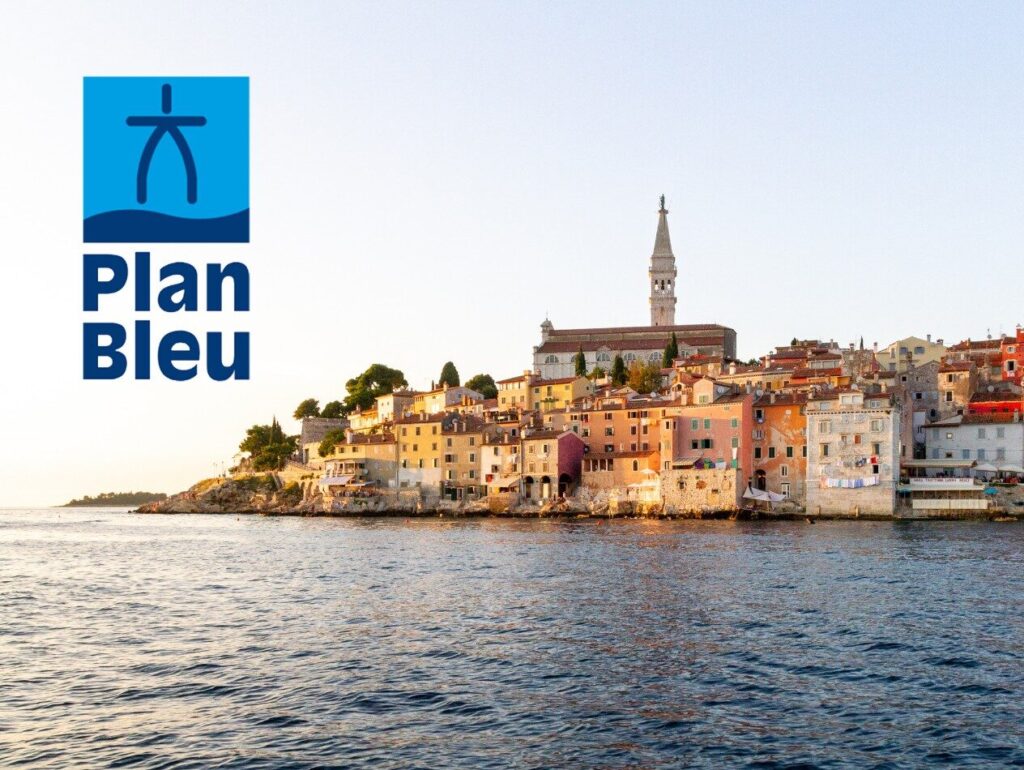
Addressing Critical Challenges
Translating science into policy is hard. Plan Bleu has been doing it for decades. As a Regional Activity Centre of the UN Environment Programme’s Mediterranean Action Plan, they sit at the intersection of research, governance, and regional strategy — helping shape environmental policy for 250 million people living along one of the world’s most climate-vulnerable coastlines.
We at AnaEE-ERIC are thrilled to have them join our policy workshop at the AnaEE Science Conferene 2026.
Q: Impactful policy work is difficult to achieve – which specific pieces of work do you feel have genuinely moved the needle, and how do you know they did?
EL: We have seen genuine impact through our foundational work on the Mediterranean Strategy for Sustainable Development (MSSD), for which we served as the technical secretariat. More recently, our empirical analysis of Environmentally Harmful Subsidies has directly influenced the upcoming revision of the MSSD (2026–2035). Because of this targeted work, sustainable and green finance will now be integrated as a strategic regional priority, institutionalizing mechanisms to reorient public and private financial flows.
We also know we are moving the needle when our methodologies are written directly into local laws and strategies. By deploying our participatory “Climagine” methodology, we have successfully helped translate complex climate data into concrete Integrated Coastal Zone Management (ICZM) plans and national strategies in countries like Morocco, Montenegro, and Lebanon. Finally, by hosting the scientific secretariat for MedECC (Mediterranean Experts on Climate and Environmental Change), we facilitated the publication of the first comprehensive assessment report (MAR1) on climate change in the basin, providing an unprecedented, unified scientific framework for Mediterranean decision-makers.
“AnaEE-ERIC’s unique position as Europe’s premier infrastructure dedicated to ecosystem experimentation and manipulation aligns perfectly with our regional sustainability goals.”
Éloïse LEGUÉRINEL,
Nature-based Solutions (NbS) and Territorial foresight Project Manager
Q: Getting research to genuinely influence policy is something many organisations struggle with. What has PlanBleu learned along the way about what actually works — and what doesn’t?
EL: We have learned that simply producing scientific data is not enough; success lies in actively facilitating a robust Science-Policy-Society interface. What truly works is adapting the vocabulary of environmental science so that it resonates with political leaders. This often means translating ecological realities into tangible socio-economic impacts—such as our cost-benefit evaluations of Marine Protected Areas, the financial viability of desalination, or the economic consequences of coastal risks. Furthermore, participatory methods are essential. In projects like MED 2050 and CASadapt, we bring scientists, local authorities, the private sector, and civil society together to co-construct future scenarios and define sustainability indicators. When local stakeholders are involved in generating the solutions, the resulting policies are much more likely to be adopted. Conversely, what doesn’t work is top-down, isolated academic research that fails to engage multi-level governance structures and local realities.
Q: Policy engagement takes sustained effort and conviction. What keeps Plan Bleu motivated to invest in this work?
EL: We are driven by the core philosophy of our prospective approach: the future is not predetermined, but rather “imaginable” and open to multiple possibilities. Knowing that our work directly helps design a sustainable, resilient future for the 250 million people living in these highly vulnerable coastal zones fuels our ongoing commitment. Our motivation is deeply rooted in our historical mandate as a Regional Activity Centre of the UN Environment Programme’s Mediterranean Action Plan (UNEP/MAP). The Mediterranean is a recognized climate change “hotspot,” warming at a rate of 1.5°C above pre-industrial levels, which outpaces global averages. The region is facing overlapping crises: severe water stress, unprecedented coastal artificialization, biodiversity loss, and alarming levels of plastic pollution.
Q: Now that we started developing our first policy papers at AnaEE-ERIC, we were really glad to have Plan Bleu come on board. What drew you to this collaboration, and what added value do you hope it will bring?
EL: AnaEE-ERIC’s unique position as Europe’s premier infrastructure dedicated to ecosystem experimentation and manipulation aligns perfectly with our regional sustainability goals. At Plan Bleu, we heavily advocate for Nature-based Solutions (NbS) and Ecosystem-based Adaptation (EbA) to combat climate risks, air pollution, and coastal degradation. We were drawn to this collaboration because it bridges AnaEE’s cutting-edge experimental ecosystem data with our socio-economic and policy-oriented focus. The added value we bring is our decades of experience in navigating the science-policy interface and our direct integration into regional decision-making frameworks, such as the Barcelona Convention. Together, we hope to translate rigorous experimental ecology into actionable, systemic policy recommendations that can be directly utilized by governments and stakeholders.
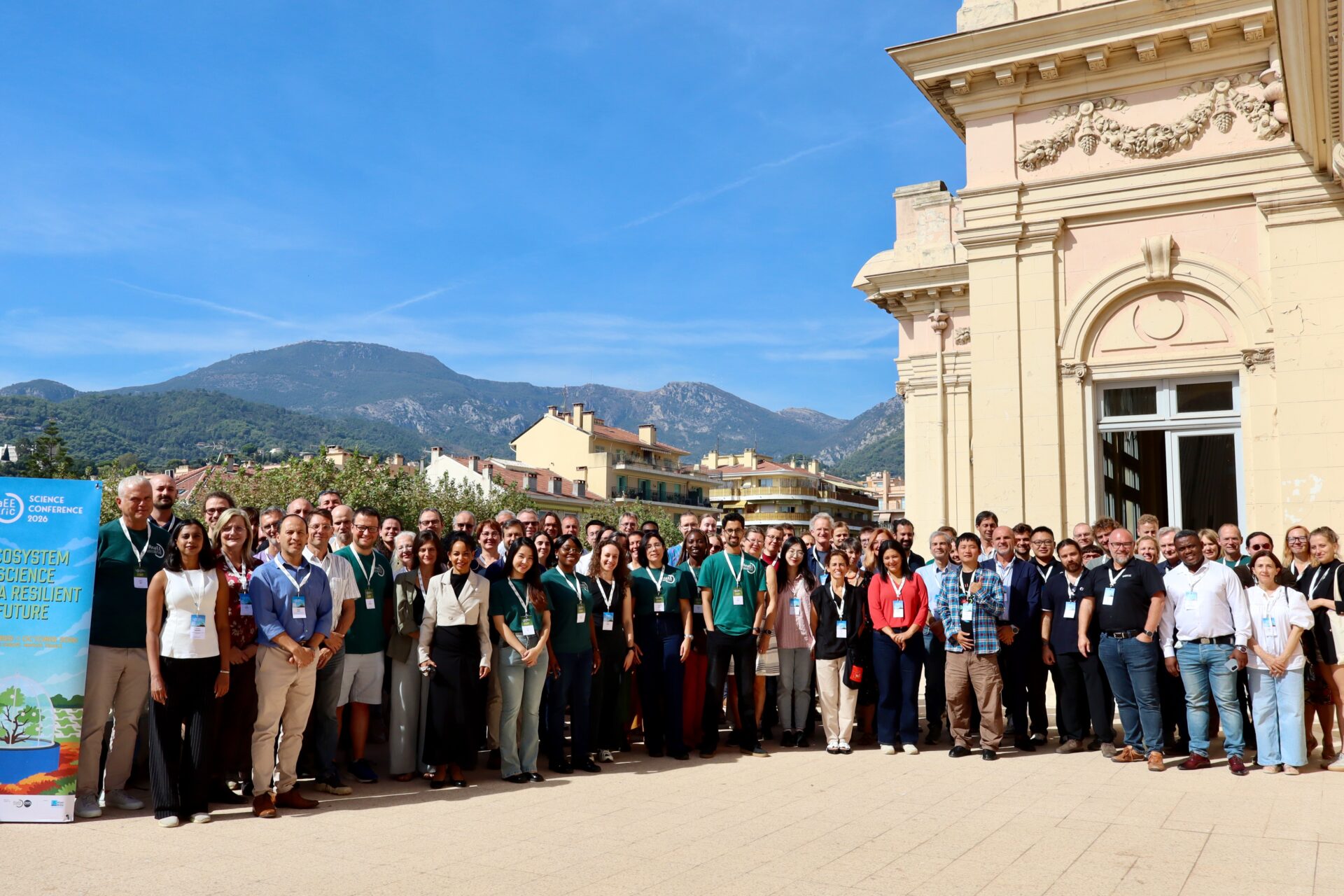
Join us in Menton: Don’t miss Europe’s N°1 conference dedicated to ecosystem experimentation and manipulation for climate risk assessment and sustainable solutions. Plan Bleu is co-leading the workshop “Enhancing Resilience in Mediterranean Forests through Nature-based Solutions (NbS)” on Wedneday, September 30 at 14:00 CEST.