Addressing Critical Challenges
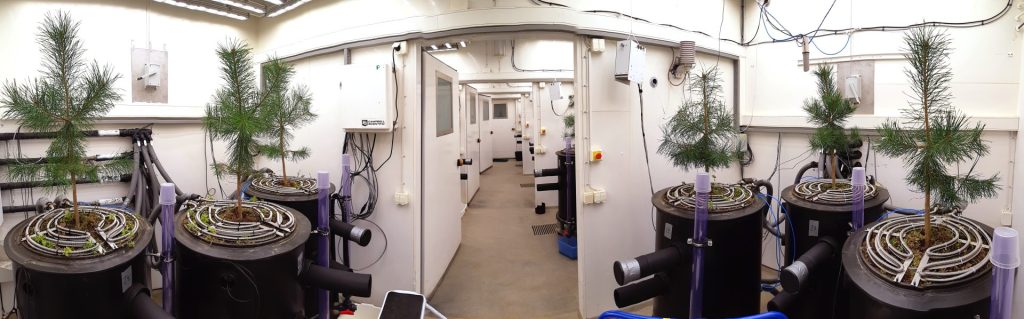
AnaEE ERIC is pleased to announce that research from the Joensuu Root Laboratory will be presented at the 9th International Conference on Environmental Sustainability and Climate Change. Dr. Timo Domisch, facility manager of the AnaEE Finland Joensuu Root Laboratory (Natural Resources Institute Finland), will present findings on “Soil waterlogging affecting tree fine root longevity and plant survival” — research with important implications for sustainable management of boreal peatland forests in a changing climate.
Understanding Root Responses to Extreme Weather
As climate change brings more frequent extreme weather events to the boreal zone, including heavy rainfall and short-term soil waterlogging, understanding how tree root systems respond becomes critical for forest management and carbon sequestration strategies.
Fine roots play a crucial role in carbon and nutrient cycling within forest ecosystems. Dr. Domisch’s research, combining results from four experiments conducted at the Joensuu Root Laboratory, reveals that waterlogging during the growing season significantly decreases fine root survival and longevity. The longer waterlogged conditions persist, the more severe the impacts on both root systems and aboveground tree growth.
Interestingly, waterlogging during the dormant season showed no clear detrimental effects, highlighting the importance of timing in understanding climate impacts on forest ecosystems.
“Boreal carbon stocks represent a critical climate feedback, yet the lack of quantitative thresholds for root physiology and phenology, soil biogeochemistry, and hydrology prevents the establishment of robust, science-based management targets. To move beyond isolated observations, we need a process-based synthesis of how soil temperature and hydrology, particularly extreme events, regulate the balance between fine-root dynamics, soil processes and forest management.”
Dr. Timo Domisch
AnaEE Finland
AnaEE Facilities Advancing Root and Soil Research
The Joensuu Root Laboratory exemplifies AnaEE’s capacity for controlled experimental research on environmental factors affecting plant growth, performance, and survival. Using advanced minirhizotron imaging technology, researchers can track individual fine roots from appearance to disappearance, providing unprecedented insights into belowground ecosystem processes.
This work demonstrates how AnaEE facilities enable long-term, detailed studies of ecosystem responses to environmental stressors—essential knowledge for developing sustainable forest management practices as climate conditions evolve.
Implications for Forest Management
The findings underscore the need to consider fine root responses to elevated water tables in sustainable management of boreal peatland forests. Given the crucial importance of fine roots for tree growth and carbon sequestration, management approaches such as continuous cover forestry and ditch network maintenance may help mitigate the impacts of increasingly frequent waterlogging events.
Join us in Berlin: The International Conference on Environmental Sustainability and Climate Change deals with the scientific concepts that underpin modern biotechnologies and how innovations can be exploited for the development of products and processes such as biofuels, novel bioactive compounds and waste conversion technologies. You’ll also explore the bioethical, socio-economic and regulatory aspects of environmental sustainability and the role of biotechnologies in environmental protection. Learn more about the conference at crgconferences.com