the inverview #1
The interview: Exploring the Future of Forests in the Beskids Mountains
In the Moravian–Silesian Beskids, the air is crisp and the forest almost silent. A few hikers pass along the trail, unaware of the futuristic structures hidden just beyond the ridge.
As we approach, the tree line parts and a series of glass domes emerge—transparent, geometric shapes cutting sharply into this otherwise untouched mountain landscape.
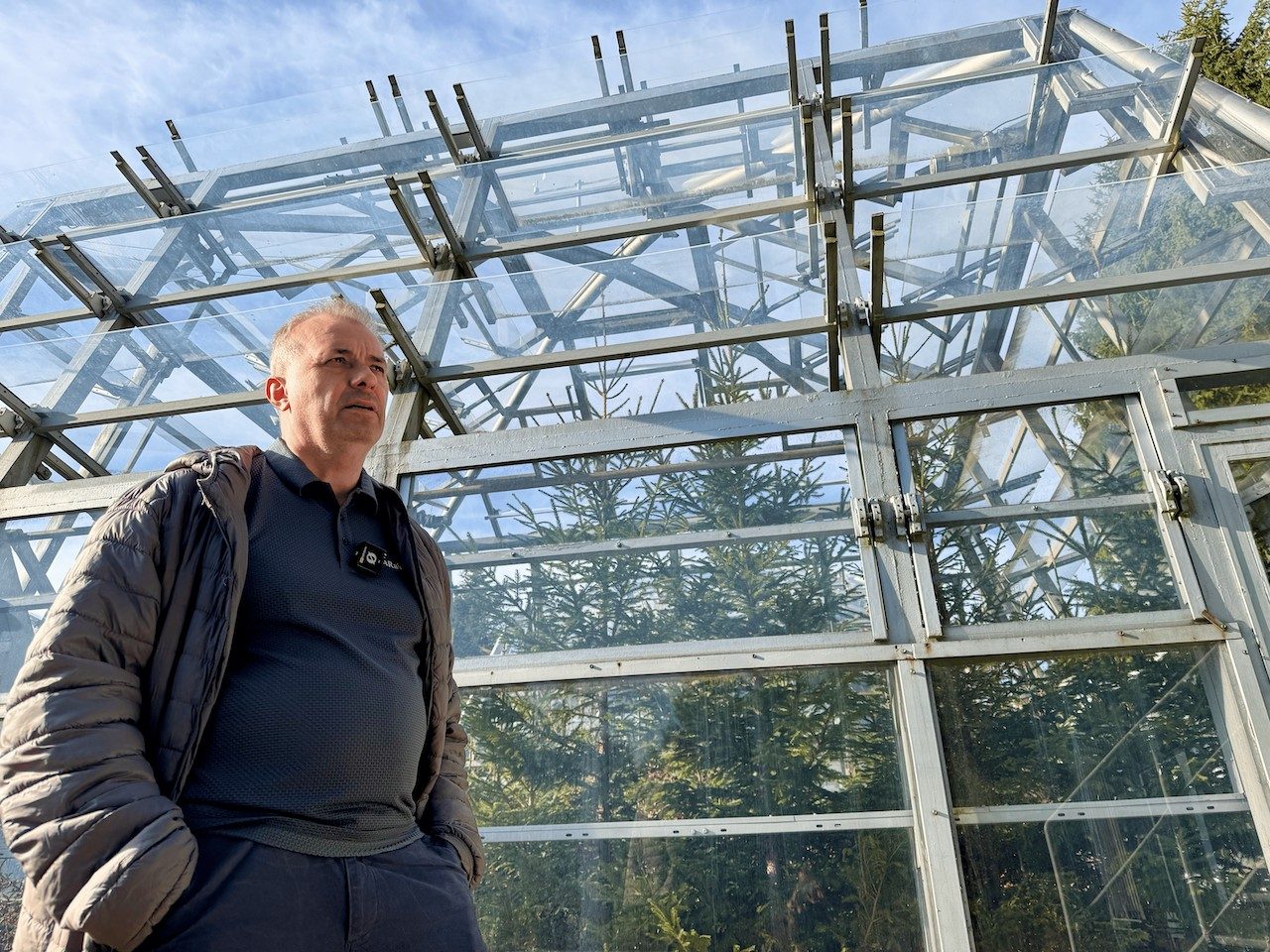
“It’s unusually warm for this time of year,” Assoc. Prof. Karel Klem says as he steps out of the car. It’s a sentence scientists repeat across Europe these days, each season bringing new anomalies, new deviations from what used to be normal. “Something is always unusual with the weather now,” he adds, looking up towards the canopy.
This is Bílý Kříž, the Czech node’s flagship experimental station, perched nearly 900 meters above sea level. Here, in this quiet corner of the Czech Republic, researchers are simulating the future—literally.
Inside the Glass Domes: Testing Tomorrow’s Climate
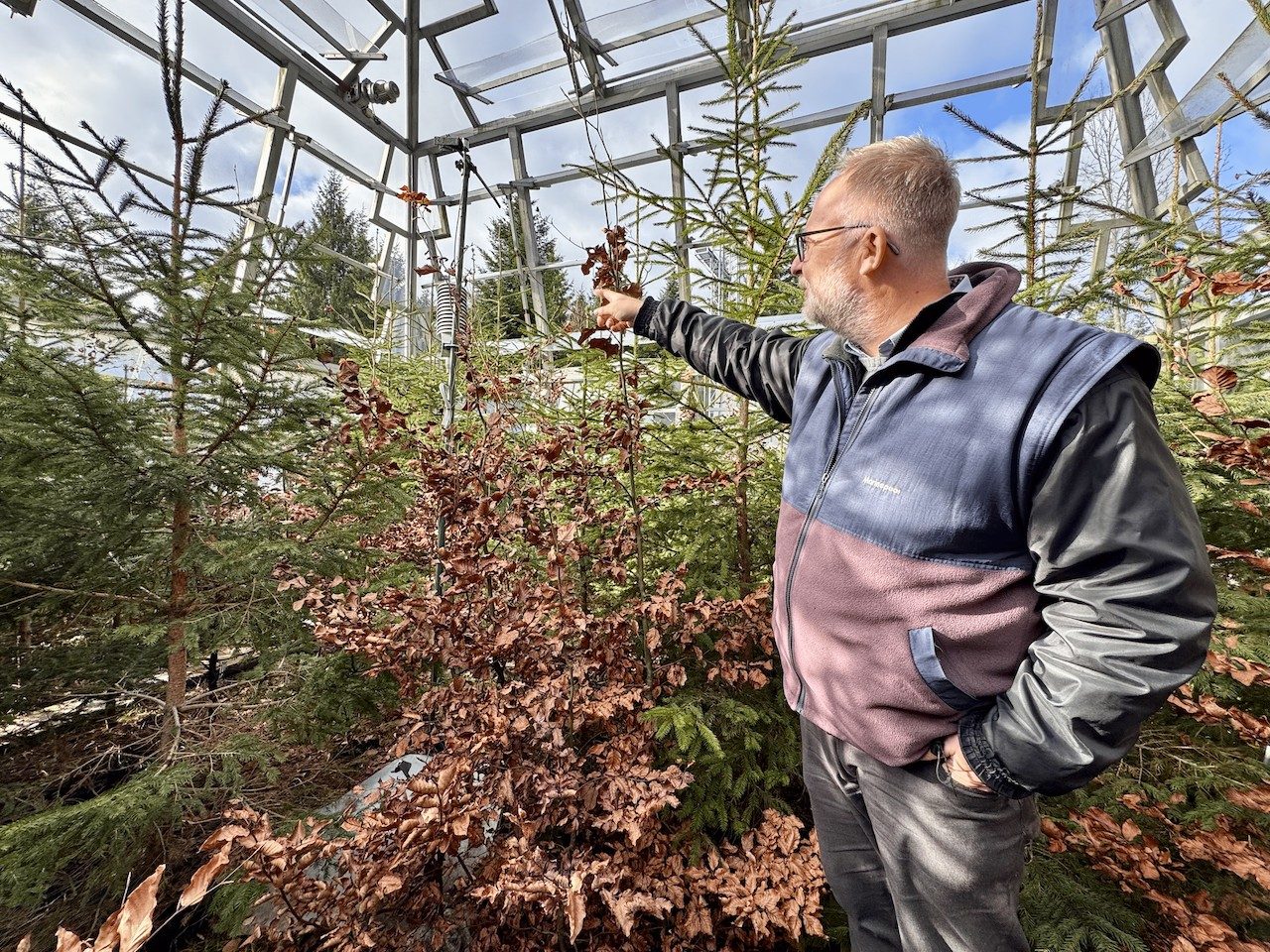
“We are analyzing the impacts of future climate conditions on young forest ecosystems,” Karel explains as he leads us toward one of the domes. Inside, young stands of Norway spruce and European beech grow in precisely controlled conditions. Atmospheric CO₂ levels are elevated to 600–700 ppm, the concentration expected at the end of this century.
But it doesn’t stop at CO₂.
“Because these domes allow multifactor experiments, we can manipulate water availability, simulate drought, or add nitrogen to mimic atmospheric deposition,” he says. “This helps us understand how forests may respond when several stressors happen at once—which is the reality of climate change.”
The transparent panels, the rotating lamellas, the silent fans pushing air evenly through the space—all of it is automated, reacting to temperature, wind direction, and rainfall.
The experiments have been running for almost 30 years, one of the longest continuous CO₂ manipulation studies in Europe.
A Living Laboratory in a Popular Hiking Region
The station’s unusual appearance and accessibility also attract curious visitors.
“This trail leads to the highest peak in the Beskids, so many hikers stop to ask about the domes,” Karel says. “People want to know what will happen to our forests—whether spruce will decline, which species may dominate, and what the future landscape will look like.”
He smiles slightly. “And they are also fascinated by the technology.”
Some visitors come not for the science, but for the night sky. “There is almost no light pollution here. Astronomers love it,” he adds.
Not Just Studies of the Future — Comparations With the Present
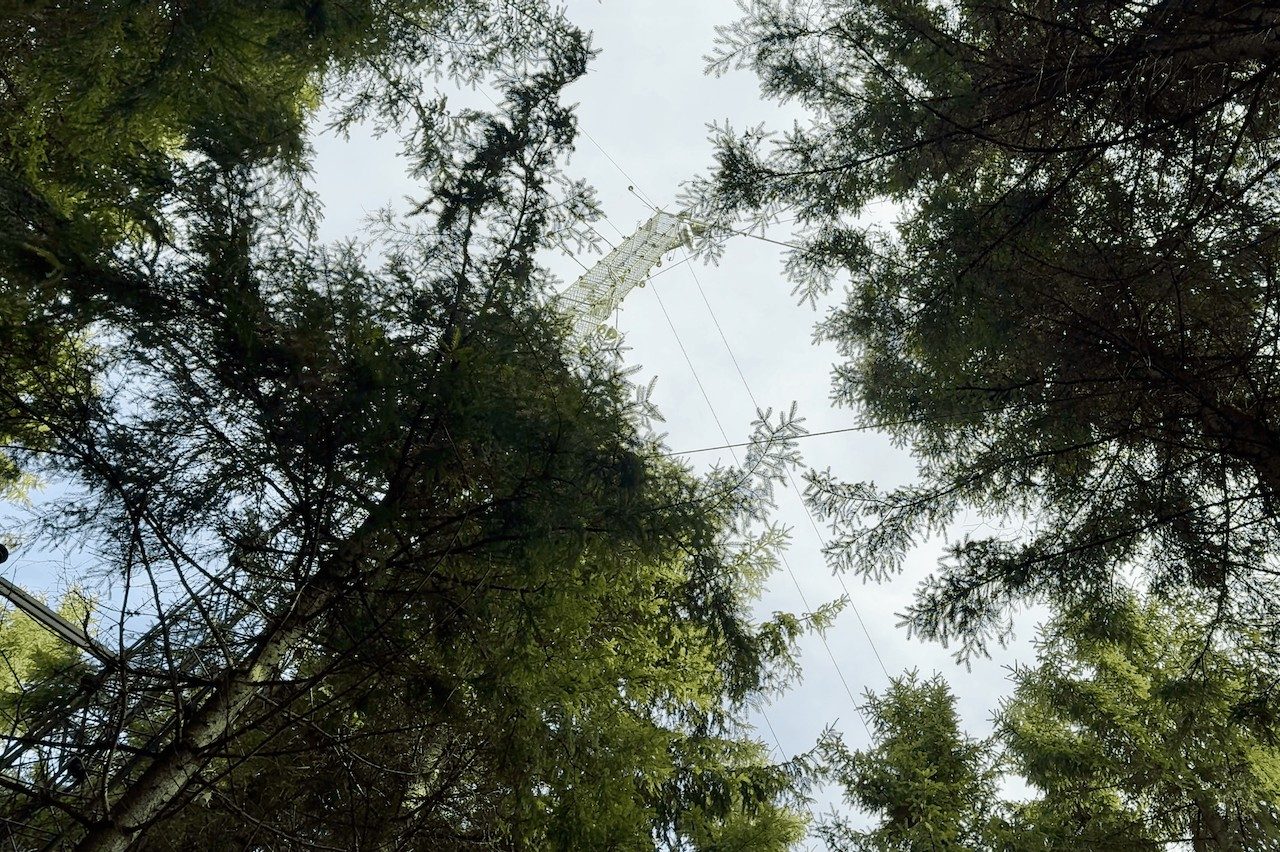
Just beside the dome experiment stands a tall meteorological tower—part of the ICOS ERIC network—measuring carbon fluxes, water vapour, and energy exchanges between the forest and the atmosphere.
“This allows us to compare controlled experiments with real forest conditions,” explains Karel. The team monitors light intensity, humidity, tree growth, and more, using dendrometers and extensive sampling analysed at the CzechGlobe laboratories in Brno.
Using isotopic analysis, they can even look back in time. “By analysing individual tree rings, we can understand how trees responded to stress decades ago, and whether they are becoming more vulnerable.”
Climate Change Concerns
When asked about his personal concerns, Karel doesn’t hesitate. “My background is in agriculture, so my first worry is food security,” he says. “We already see dramatic variations in yields due to drought and heat waves.”
But he also points to the challenges cities will face.
“In Central Europe, temperatures can reach 37°C or more in summer. Heatwaves affect human health, infrastructure, and energy demand. Urban trees and forests become incredibly important.”
Despite these concerns, he remains grounded and constructive. His work, after all, is designed to help solve problems, not just describe them.
An Optimistic Outlook—Solutions Through Science
“We always search for solutions,” Karel concludes as we walk back toward the car. “Understanding how forests respond to stress helps us manage them better. Our work supports foresters, policymakers, and society in adapting to climate change.”
He gestures toward the domes, glowing in the mountain light. “Forests have remarkable resilience. If we learn how to support them, we can keep them healthy for future generations.”
Other Facilities of the AnaEE Czech Republic Node
In addition to the Bílý Kříž experimental platform, the Czech node provides a diverse range of research infrastructures that support forest, soil, and ecosystem studies across scales:
1. Rájec Experimental Research Site: A forest research platform designed for long-term ecological and biogeochemical studies, including canopy processes, forest productivity, and environmental stress experiments.
2. Atmospheric Station Křešín u Pacova: A high-precision station measuring greenhouse gas concentrations and atmospheric composition, essential for understanding regional carbon budgets and validating climate models.
3. Lysina Critical Zone Observatory: A long-term hydrological and biogeochemical site focused on soil–water–forest interactions, nitrogen cycling, and environmental change in sensitive headwater catchments.
4. Vrchlabí Ecophysiological Laboratories: Advanced indoor and outdoor experimental facilities for studying plant stress physiology, including drought, heat, and elevated CO₂, with a strong connection to climate-impact research.
Explore them in the ISIA catalogue of services and apply throught one of our EU projects for free access.
Quick Links
Contact info
Other
Newsletter
Subscribe to our newsletter for funding opportunities, publications, events and other ecology research news.
Copyright © 2025. All rights reserved.