An interview with Dr. Vincent Leemans, TERRA-Ecotron, University of Liège
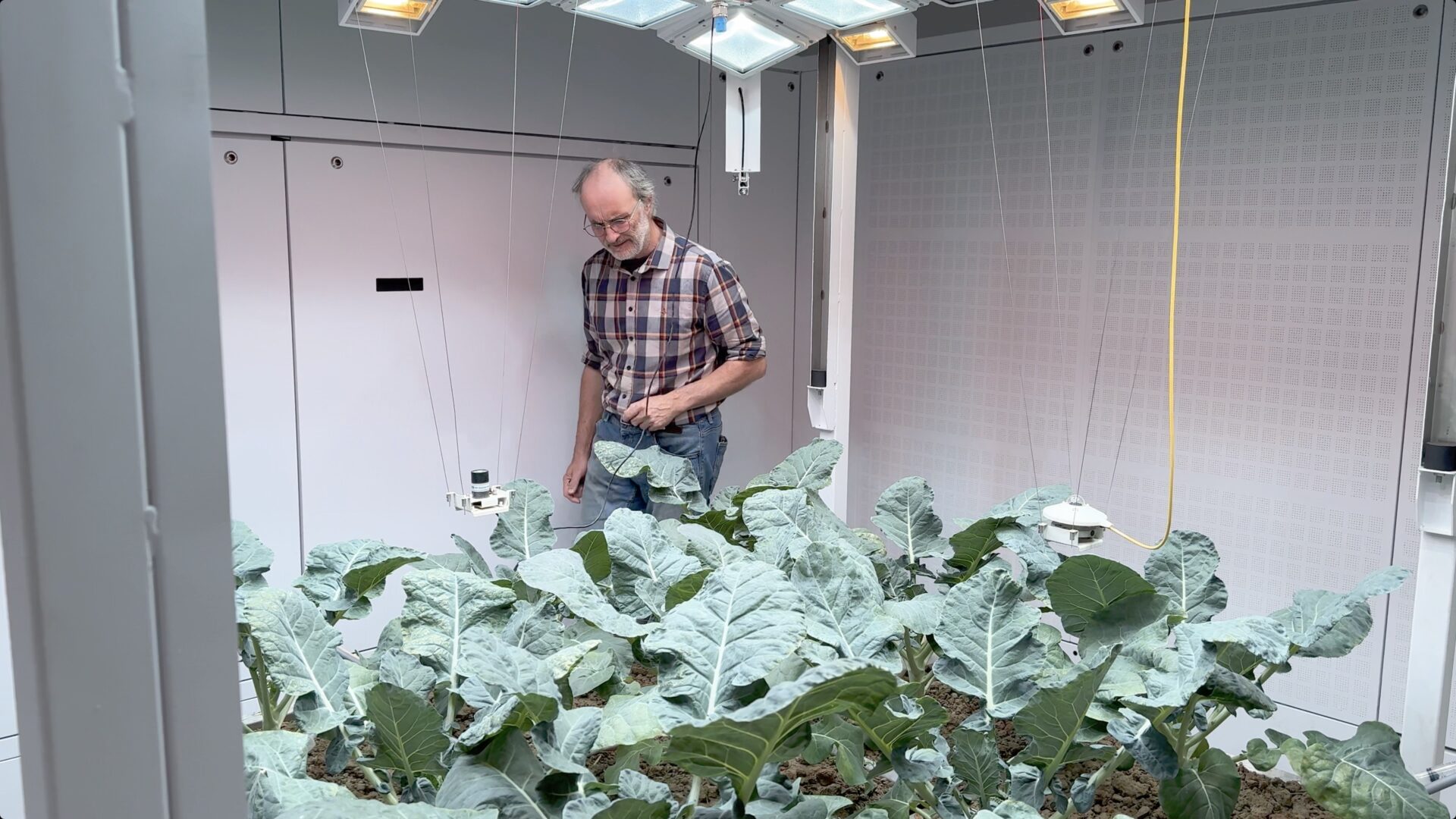
Dr. Leemans under the artificial sun in Belgium.
As climate models grow more sophisticated, one of the biggest challenges for agronomists is testing how crops will actually respond to the conditions those models predict — before those conditions arrive. At the TERRA-Ecotron facility (ULiège), part of the AnaEE-ERIC research infrastructure network, Dr. Vincent Leemans and his colleagues are doing exactly that: recreating tomorrow’s climate today, inside enclosed, fully controlled research chambers.
We spoke with Dr. Leemans about what these facilities make possible, what the research has revealed so far, and why this kind of controlled-environment science matters more than ever.
Why are enclosed facilities like TERRA-Ecotron so valuable for environmental science research?
– The key advantage is control. Because we can precisely manage every parameter — light, temperature, and more — we can recreate virtually any experimental condition at any time, including future meteorological scenarios drawn directly from climate models. We’re not dependent on what’s happening outside.
If a future climate scenario calls for full sunlight but it happens to be a cloudy day, that’s not a problem — we simply provide the light. The reverse is equally true: if the model calls for low light but it’s a bright, sunny day outside, we can dial the light down. In effect, we can turn July into January if the experiment requires it. Also the atmospheric composition can be manipulated—and specifically the CO² concentration that is adjusted to the value predicted for the simulated period.
– We also control air renewal through HEPA filtration, which means we can safely introduce elements like bacteria or insects into a fully confined space — something that would be far harder to manage in an open-field setting.
Have any of your experiments produced surprising — or even concerning — results about future climate scenarios?
– I wouldn’t say concerning, exactly — nothing we can’t adapt to — but some results were genuinely different from what the models predicted. Winter, in particular, turned out to be an area we’d overlooked.
Agronomic models traditionally assume that not much happens to crops during winter, so that season doesn’t get much attention. But the reality is quite different. A two-degree increase in summer, when it’s already 20°C, is a fairly marginal change. A two-degree increase in winter, when temperatures are near freezing, is enormous by comparison.
Much of what they have observed traces back to this winter effect. Warmer winters mean faster early growth — which sounds beneficial, but it actually shifts the plant’s development earlier into the season. So when the plant reaches a given developmental stage, it’s now doing so earlier in the year, under lower light levels, even though the outside temperature at that stage is comparable. It’s a subtle but important shift that models focused on summer conditions simply miss.
Is there more interest in this kind of climate research now than there was 10 or 15 years ago?
– There’s definitely renewed interest, driven by growing awareness of climate change — and that’s a very positive development. But it’s worth noting this type of work isn’t new. Researchers were bringing plants into controlled environments to study them as far back as the 1980s.
What has changed dramatically is the technology.
Twenty or thirty years ago, there was no didn’t have LED lighting or plasma lamps, so producing a full light spectrum at full intensity was much harder. Today’s technology allows far more realistic simulations of environmental conditions, which makes the science considerably more powerful than it was a generation ago.
The role of ecotrons in the wider AnaEE network
At TERRA-Ecotron, the focus is agro-ecosystems, and understanding how they’ll respond to future conditions is critical.
– Take wheat, for example. New varieties are developed constantly, and breeders often assume these varieties will simply adapt over time. That may be true, but when a new variety is developed by crossing existing ones, it still needs to be tested — and every growing season is different. What we can offer is a way to answer a crucial question: is this particular year’s growing conditions representative of the future climate, or more like conditions from the past?
Insights like that helps breeders understand which plant characteristics — root structure, growth rate, and other traits — are likely to matter most under future climate conditions.
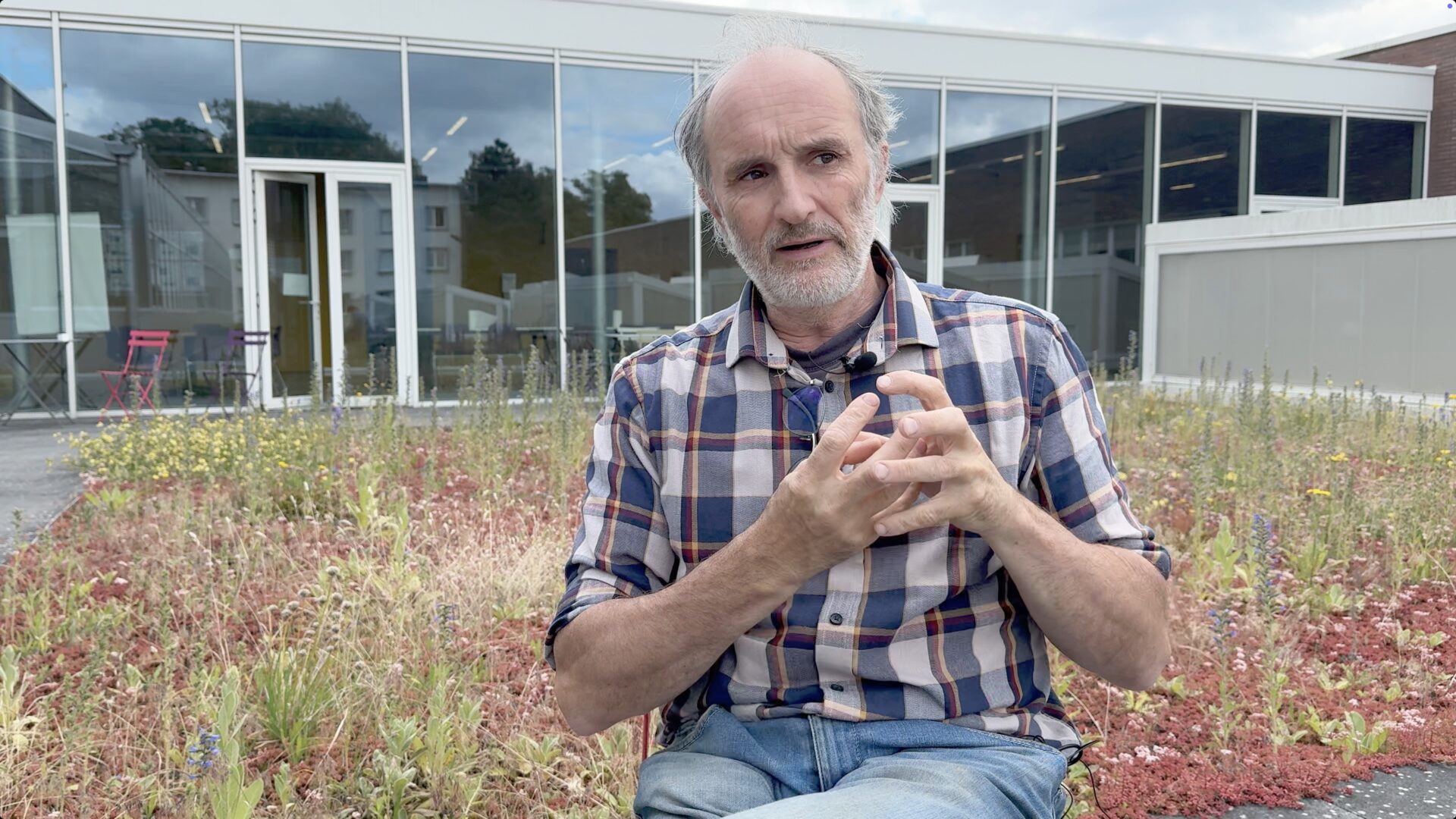
“Researchers were bringing plants into controlled environments to study them as far back as the 1980s.
What has changed dramatically is the technology. “
– Dr. Vincent Leeman
Simulating tomorrow’s climate
– This becomes especially urgent for crops where new varieties take longer to develop and reach the field. Some varieties remain in use for around 20 years, and over that time climate conditions can shift substantially. For trees, where breeding and growing cycles are measured in decades, the need to look far into the future is even greater.
By simulating tomorrow’s climate today, facilities like TERRA-Ecotron give researchers, breeders, and policymakers a genuine head start — turning long-term climate projections into concrete, testable insights that can shape more resilient crops and agricultural systems for the future.
TERRA-Ecotron is a member facility of the AnaEE-ERIC research infrastructure, which provides open access to experimental platforms for the study of continental ecosystems across Europe.
Contributors:
Dr. Vincent Leeman | Written by: Amanda Ölander, AnaEE-ERIC
This article is part of AnaEE-ERIC’s series on cutting-edge ecological research across Europe.
Explore AnaEE Belgium | Discover all AnaEE-ERIC’s research facilities.
Quick Links
Contact info
Other
Newsletter
Subscribe to our newsletter for funding opportunities, publications, events and other ecology research news.
Copyright © 2025. All rights reserved.