the inverview #3
The interview: From Childhood Ponds to Groundbreaking Research: Jonas’ Journey in Aquatic Ecology and Tackling Invasive Species
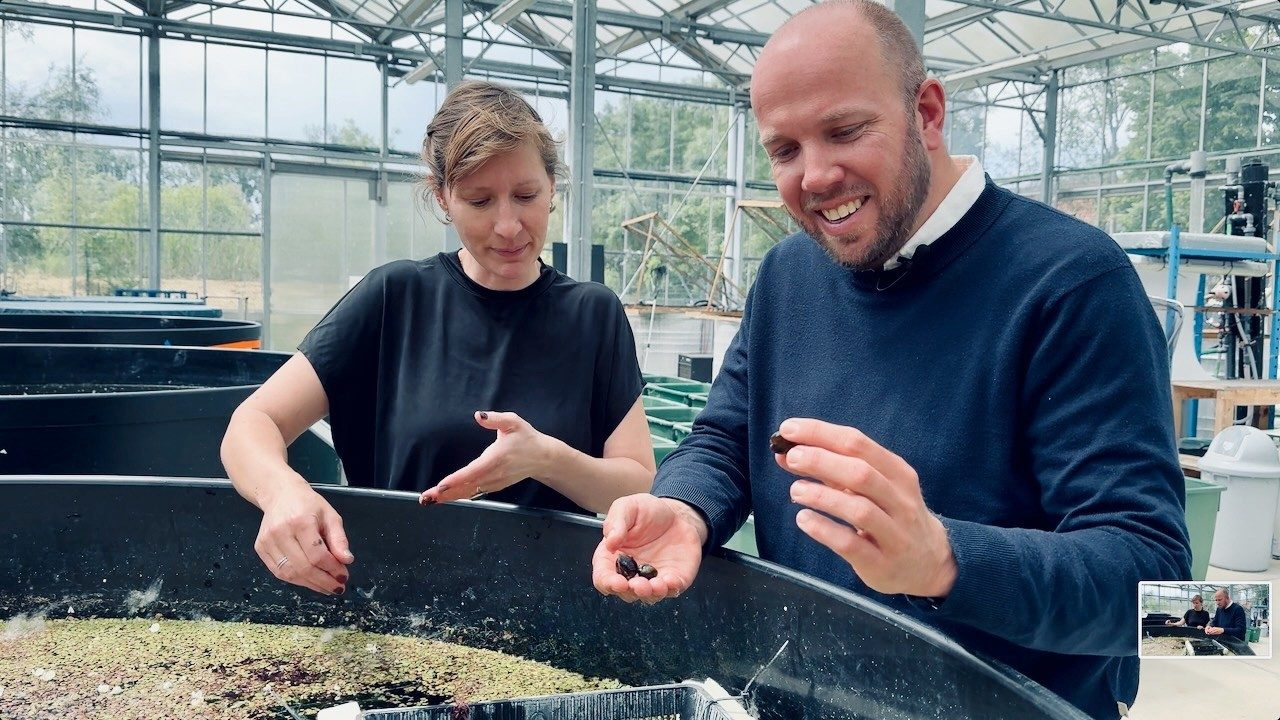
Jonas Schoelynck, Prof Aquatic Ecology with his colleague
“My interest in aquatic ecology actually started when I was a kid, playing around with fish and frogs in my dad’s pond. I kind of forgot about it for a while, but it came back during my MSc studies. I got really inspired by my professors at that time. What fascinates me most are the specific adaptations that species have developed to live in aquatic environments. Plus, I have to admit, I enjoy fieldwork in water more than on land—you can cool off on hot days!”
Today, Jonas focuses on unraveling the secrets of river ecosystems. His research dives into how aquatic plants influence water flow and quality, and how both living and non-living factors shape their growth. Silicon, he explains, is a game-changer: “It’s like the hidden scaffolding of aquatic life. It gives plants the strength to stand against currents and fuels diatoms—the tiny powerhouses of the food web. Without silicon, these ecosystems would look very different.”
Removal of hundreds of thousands of invasive crabs
One of Jonas’ most impactful projects tackles the invasive Chinese mitten crab, a species that has overrun European rivers, damaging native habitats. These crabs are like aquatic bulldozers, they uproot plants, disrupt food chains, and just take over.
But Jonas and his team didn’t just study the problem—they fought back. Working with the Flemish Environment Agency, they designed a trap specifically for mitten crabs. “We tested it in the Mesodrome first, that facility is a game-changer—it lets us simulate real-world conditions in a controlled setting.” The trap’s success was immediate. Installed in five Belgian waterways, it now removes hundreds of thousands of crabs annually. The project has since expanded across Europe through the Interreg Clancy initiative. “Seeing something start in a lab and grow into a solution used in multiple countries—that’s why I do this work,” Jonas reflects.
The Mesodrome itself is a marvel, a place where science meets the real world. They have got everything from ponds to raceway flumes to a full-scale river simulator. It’s not just about studying one species in isolation—it’s about understanding how fish, plants, zooplankton, and algae interact as a whole. That’s where the real insights come from.
For Jonas, this holistic approach is key to addressing the big challenges—climate change, pollution, invasive species—facing aquatic ecosystems today. “We’re not just observing nature,” he says. “We’re learning how to protect it.”
Access our Aquatic Research Facilities
AnaEE-ERIC offers a network of advanced aquatic research facilities across Europe, including the Mesodrome and other platforms for experimental ecology. Researchers can access these facilities free of charge by applying through Horizon Europe projects such as AQUASERV, opening doors for innovative studies in aquatic ecosystems.
Explore them in the ISIA catalogue of services and apply throught one of our EU projects for free access.
Quick Links
Contact info
Other
Newsletter
Subscribe to our newsletter for funding opportunities, publications, events and other ecology research news.
Copyright © 2025. All rights reserved.