
luke investigates diversity in urban forests
In a joint PPP project between Luke (part of AnaEE Finland) and five cities, the effects of forest management on the diversity of urban forests were studied
Urban forests are vital natural areas with diverse species. Various tree species, as well as trees of different sizes and ages, provide valuable habitats for numerous species. In a joint project between the Natural resources institute Finland (Luke) and cities in Southern Finland, the effects of forest management on tree regeneration, soil microbiota, and the diversity of decay fungi were studied.
The management of urban forests is delicate, aiming to preserve recreational, landscape, and biodiversity values. Branches are cleared from paths, and individual trees are felled, for example, for safety reasons. In Luke’s PPP project with five cities, called TAMO (Biodiversity in Urban Forests), the effects of forest management on urban forest biodiversity were studied.
“Urban forests are important areas of biodiversity. They host, for instance, endangered fungal species,” says Leena Hamberg, principal scientist at Luke. “Urban forests have minor economic expectations and, in some cases, no expectations at all, especially in Southern Finland. They are managed for the residents, as recreational environments.”
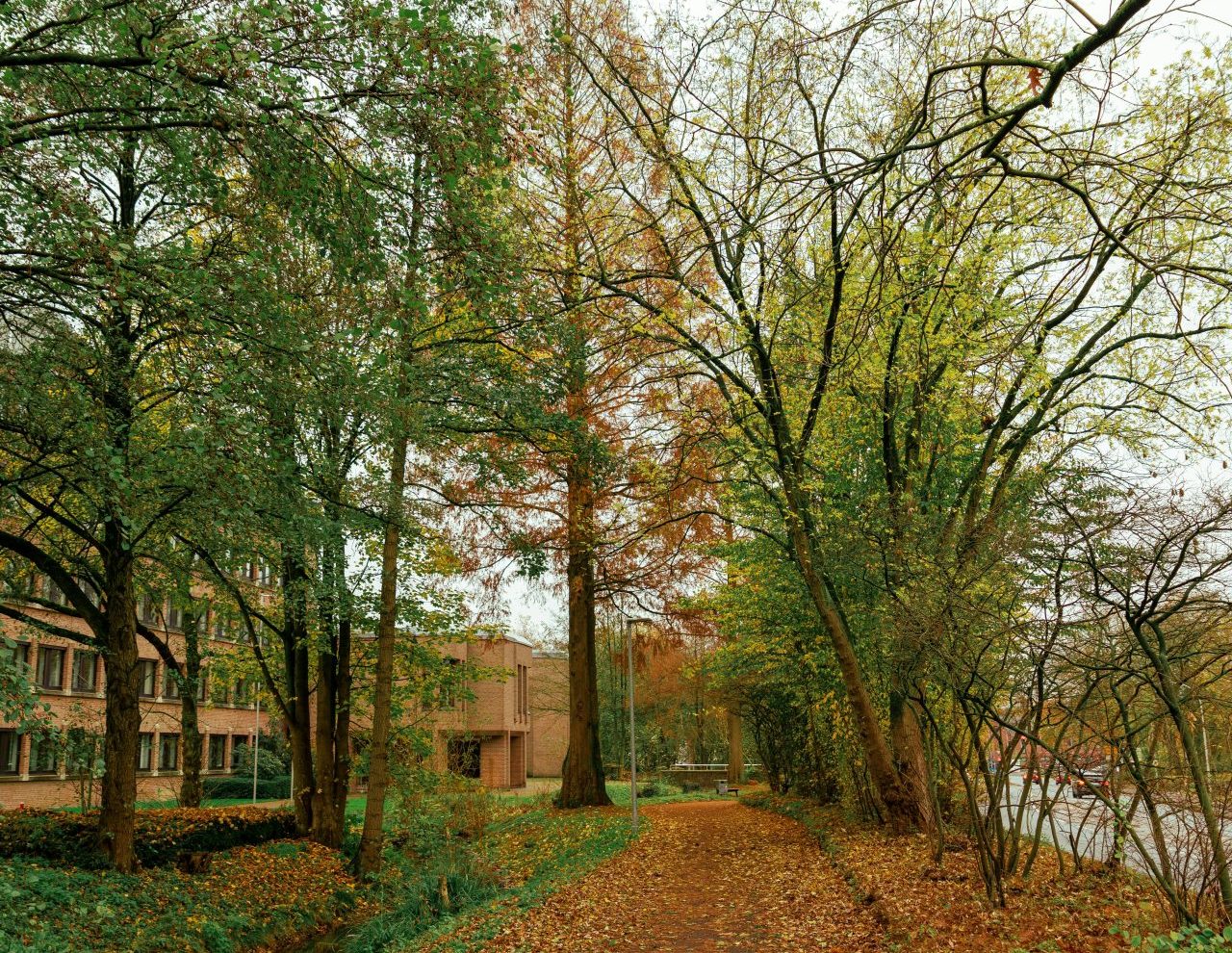
Decayed wood plays a significant role in urban forests.
TAMO is a Public-Private Partnership (PPP) project funded jointly by Luke and the participating cities. In PPP projects, the funders and Luke prepare research questions together. The project’s research found that the regeneration of light-demanding trees, such as birches, in spruce-dominated forests requires a reasonably open canopy. Conversely, the regeneration of spruces and their sapling development can be supported in urban forests by preserving thickets.
According to the studies, slight management of urban forests does not significantly affect forest soil or substantially influence tree regeneration. However, diversifying the tree species composition can enhance biodiversity in the area by increasing the richness of fungal symbionts associated with tree roots.
Decomposing wood of different sizes complements each other from a biodiversity perspective. Decay wood serves as a substrate for fungi and as a habitat for many beetles, for example.
Even small-diameter decay wood, such as dead branches, is crucial for endangered species. For instance, endangered polypore fungi were found on spruce branches. Fallen branches of deciduous trees, on the other hand, hosted endangered fungi and bracket fungi. According to Hamberg, thin branches are not optimal substrates for producing fungal fruiting bodies, but fungi can presumably spread from branches to tree trunks. Therefore, small-diameter decay wood, alongside large-diameter decay wood, is significant for biodiversity.
NOTE: This project was made with Luke and the five cities in Finland without AnaEE-ERIC involvement, and serves as an example of excellent collaboration that can be made between affiliated members (or groups) of AnaEE-ERIC. We welcome any industry or public actor to contact us should they be interested in collaborating on impact projects to shared data, knowledge and resources for a more resilient future.
Do you want to know more about the project?
For full story, more information and contact details, check out our partner Luke‘s website.

Quick Links
Contact info
Other
Newsletter
Subscribe to our newsletter for funding opportunities, publications, events and other ecology research news.
Copyright © 2025. All rights reserved.