AnaEE Belgium’s Ecotron
Will Climate Change Transform Our Heathlands? Scientists Simulate the Future to Find Out
In the heart of Belgium’s Hoge Kempen National Park, a large experiment is underway to understand how climate change might reshape heathland ecosystems. This initiative, led by Hasselt University (UHasselt) in collaboration with the University of Antwerp (UAntwerp), leverages state-of-the-art facilities like the Ecotron to simulate future climatic conditions and their impacts on these unique landscapes.
The Significance of Heathlands
European heathlands are distinctive natural environments that offer a multitude of ecosystem services, from biodiversity conservation to carbon sequestration. However, these ecosystems are particularly vulnerable to climate change, necessitating comprehensive studies to predict and mitigate potential adverse effects.
The Ecotron: A Window into the Future
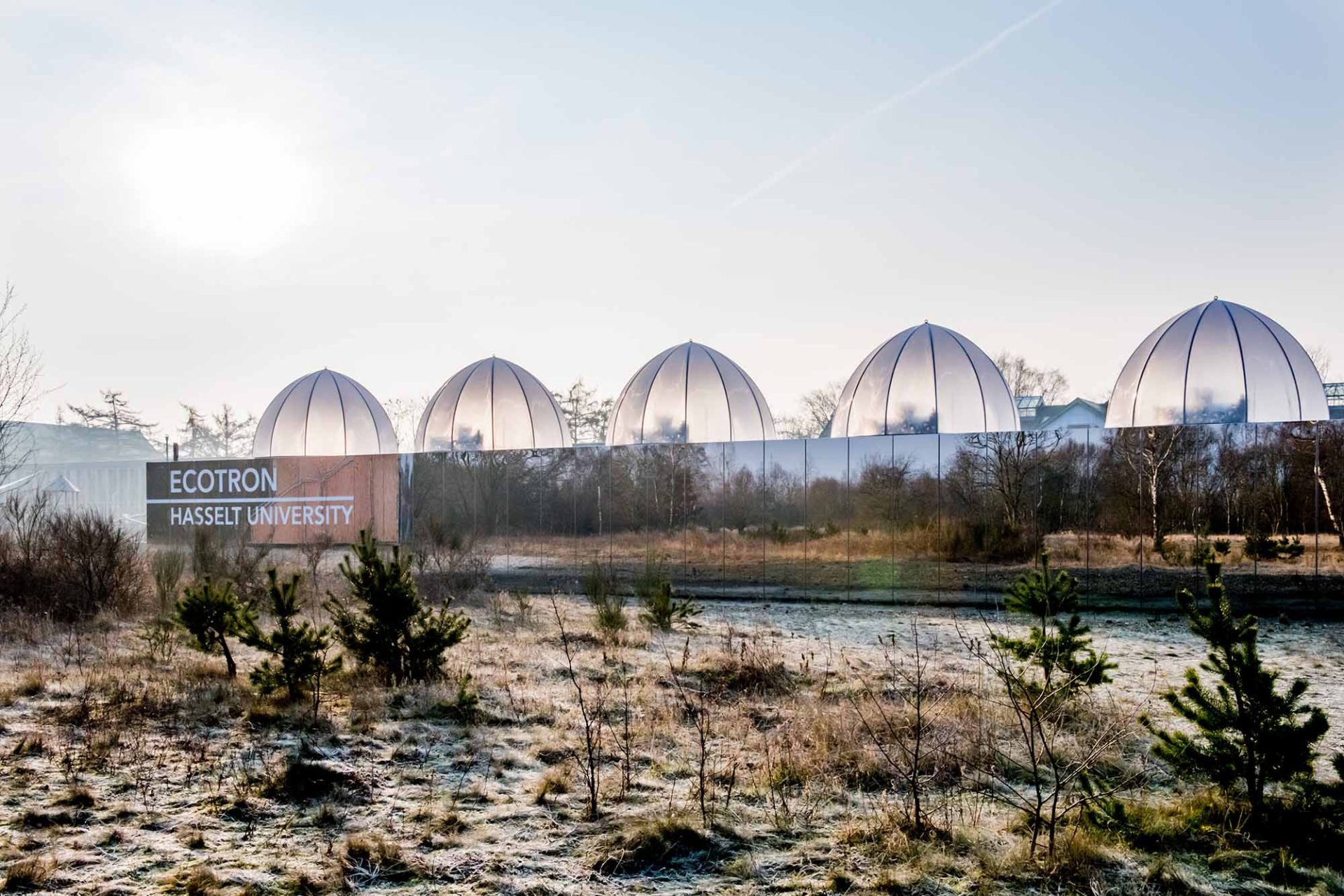
Central to this research is the UHasselt Ecotron, a sophisticated infrastructure comprising 12 closed, sunlit units where environmental conditions can be meticulously controlled. Each unit contains a lysimeter with a soil-canopy column measuring 3.14 m² in area and 1.5 meters in depth, allowing for real-time monitoring of ecosystem processes. This setup enables researchers to simulate various climate scenarios, ranging from the conditions of 1950 to projections for 2070.
Simulating Climate Scenarios
In this long-term experiment, large plots of nine-year-old heathland from Mechelse Heide have been transplanted into the Ecotron’s mesocosms. These plots are subjected to six distinct climate scenarios, encompassing both historical and anticipated future conditions. By doing so, researchers aim to assess the impacts of climate change on biodiversity, as well as on carbon, nutrient, and water cycles within the heathland ecosystem.
Focus on Soil Microorganisms
A pivotal aspect of the study is understanding the role of soil microorganisms in carbon sequestration and how climate change might influence these processes. “By examining the interactions between soil microbes and plant communities under varying climatic conditions, we can uncover potential feedback mechanisms that could either mitigate or exacerbate climate change effects”, says prof. dr. Nadia Soudzilovskaia.
The Role of UAntwerp’s Expertise and Infrastructure
The insights garnered from these experiments are invaluable for conservation strategies and policy development. By elucidating how heathland ecosystems respond to climate change, the research can inform adaptive management practices, ensuring the preservation of these landscapes and the services they provide.
A Collaborative Effort
The success of this project hinges on the interdisciplinary collaboration between UHasselt and UAntwerp, combining expertise in environmental sciences, ecology, and climate modeling. Such partnerships are crucial for addressing the multifaceted challenges posed by climate change.
The University of Antwerp (UAntwerp) is a crucial partner in this research, bringing expertise in ecosystem responses to climate change through research groups such as PLECO (Plants and Ecosystems) and ECOSPHERE. These teams focus on plant and ecosystem dynamics, emphasizing climate-driven shifts in ecosystem services. In addition to the Ecotron, UAntwerp contributes with advanced research facilities, including The FATI system, which simulates climatic extremes in outdoor environments to assess their impact on terrestrial ecosystems. “With infrastructures like The Aquatic Mesodrome and The Flume, we can explore how climate change alters both freshwater and terrestrial ecosystems, helping us predict future shifts in biodiversity and ecosystem functioning,” says prof. dr. Ivan Nijs. The Aquatic Mesodrome, a glasshouse infrastructure with experimental ponds, allows for studies on hydrology and pollution effects on freshwater systems. The Flume, a 20-meter experimental river, is designed to study interactions between hydrology, water quality, and vegetation under future climate conditions. These infrastructures complement UHasselt’s Ecotron, enabling the study of climate change effects on both terrestrial and aquatic ecosystems.
Do you want to know more about these projects or the people involved?
Contact person: Nadia Soudzilovskaia, AnaEE Belgium
Be in touch
Contact details, and more information, please contact AnaEE Belgium.
Quick Links
Contact info
Other
Newsletter
Subscribe to our newsletter for funding opportunities, publications, events and other ecology research news.
Copyright © 2025. All rights reserved.