FINLAND
From Boreal Research to Global Impact
AnaEE Finland unites cutting-edge experimental and analytical facilities and services to understand, predict, and protect Europe’s natural ecosystems and their resources. Our mission is to provide world-class research infrastructures to advance science-based knowledge and deliver novel solutions that ensure the resilience of plants, soils, waters, biodiversity, and ecosystem services in the face of global change. AnaEE Finland National node brings together access to leading Finnish universities’ and research institutes’ provided services in the arctic and boreal ecosystems.
Jutta Kauppi
2022
12

An overiview
AnaEE Finland offers a wide range of facilities, including agricultural fields, peatlands, forests, tundra, long-term observation sites, biosphere chambers, and advanced analytical services across Northern Europe. Supporting both controlled and natural ecosystem experiments, it enables the assessment and manipulation of ecosystem responses to environmental change. Provided physical access services includes tailored assistance from expert scientific and technical teams, helping with experimental design, data management, and modelling. Many sites also provide logistical support and on-site accommodations for during the access. Many of these facilities are co-located with other European Research Infrastructures such as ICOS, eLTER, and ACTRIS, fostering collaboration and resource sharing across Europe.
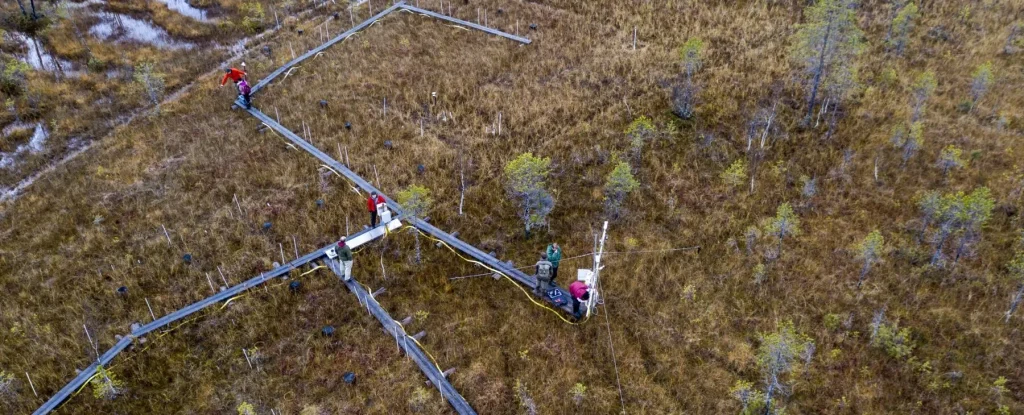
Main ecosystem types covered
- Terrestrial: Boreal forest, agricultural field, grasslands
- Forest: Boreal
- Wetland: Peatland
- Aquatic: Lake and water-related systems
- Agricultural land: Cropland and managed landscapes, including long-term field experiments
Types of experimental infrastructure
- Open-air: Long-term ecological forest monitoring, experiments in natural and semi-natural ecosystems in boreal area, agriculture experiment field and plots.
- Enclosed facilities: Greenhouses, dasotrons, and climate-controlled environmental chambers for manipulation of temperature, CO₂, and water availability
- Analytical: Laboratory facilities for isotope research
- Monitoring and sensor networks: Eddy covariance towers, soil monitoring systems, and aquatic observatories
- Partner facilities: University of Helsinki, Natural Resources Institute Finland (Luke), University of Eastern Finland, University of Turku and University of Oulu
Analytical and monitoring capabilities
- Biogeochemical analyses: Soil, water, and plant nutrient cycling, greenhouse gas fluxes
- Remote and automated sensing: Atmospheric particle instrumentation, automated soil-water samplers
- Eco physiological monitoring: Plant growth, stress responses, biodiversity assessments
- Long-term ecosystem monitoring: Integration with national and European measurement networks for climate and land-use change
- Data services and management Facilities designed to foster collaboration between with other European Research Infrastructures such as ICOS, eLTER, and ACTRIS
Specific expertise areas
- Global change drivers: Climate change, land-use change, pollution, and biodiversity loss
- Agroecology and sustainable land management: Crop productivity, soil fertility, and ecosystem services
- Forest and peatland ecology: Carbon sequestration, resilience, and restoration strategies
- Aquatic ecosystem functioning: Nutrient cycling, water quality, and ecological responses to stressors
- Integrated experimental–analytical–modeling approaches: Combining manipulative experiments with advanced analytics and predictive modeling
Partners
University of eastern Finland
University of Helsinki
University of Turku

University of Oulu

Natural Resources Institute Finland

Quick Links
Contact info
Other
Newsletter
Subscribe to our newsletter for funding opportunities, publications, events and other ecology research news.
Copyright © 2025. All rights reserved.