How do you study one of the planet’s most fragile regions without adding to the pressure it’s already under?
—— October 20, 2026.
In PHENET, four European research infrastructures join forces: EMPHASIS (plant phenotyping), AnaEE-ERIC (ecosystem experimentation), eLTER (long-term observation) and ELIXIR (data management and bioinformatics). Together with a diversity of innovative companies, they are co-developing new tools and methods, meant to contribute to new RI services, to identify future-proofed combinations of species, genotypes and management practices for the most likely climate scenarios across Europe.
Annual Meeting 2026
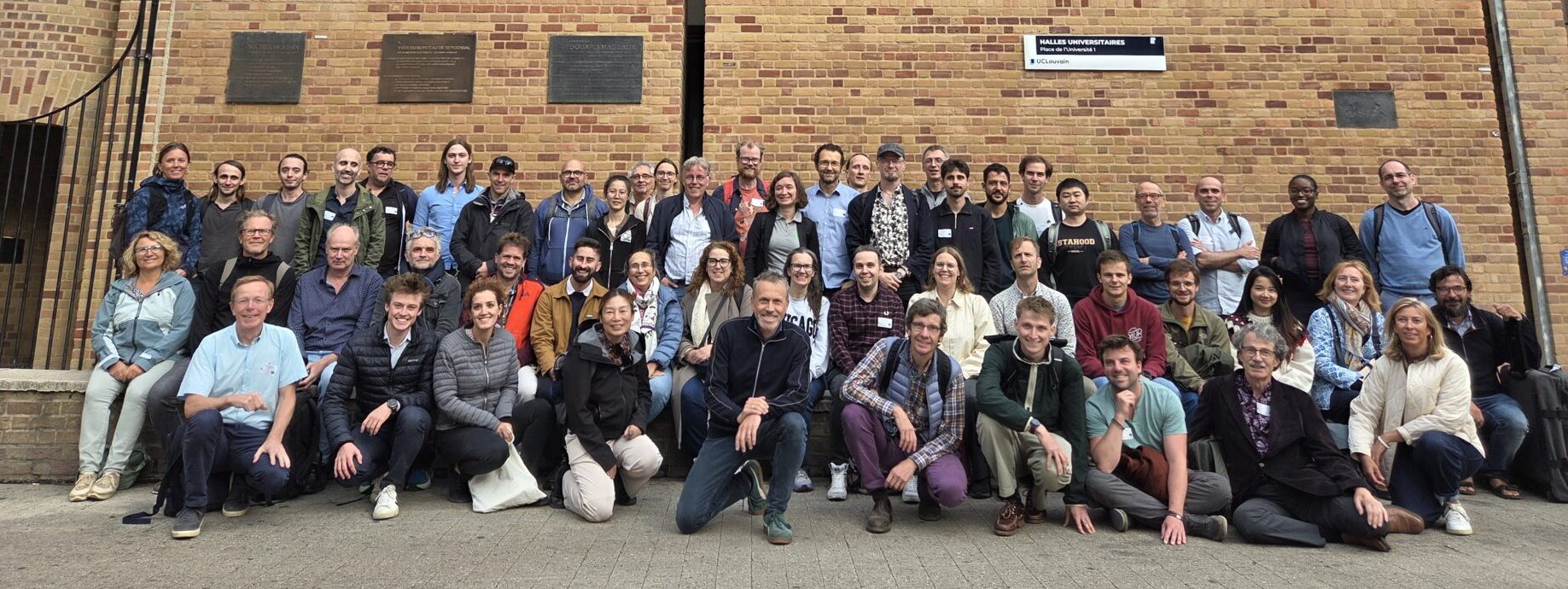
As PHENET moves into the final period of the project, which runs until the end of 2027, partners met at the Université catholique de Louvain in September 2026 to align on the last steps. More than 60 experts in phenotyping and envirotyping discussed future technological developments that support more diverse and resilient agroecological cropping systems. The technologies were demonstrated to end-users, from research to farming, whose expectations and needs are essential for developing robust tools that can be applied in real-world settings. In-depth discussions with the four partner infrastructures followed, on how to turn these developments into sustainable long-term services for the community beyond PHENET.
Gain insights into PHENET services
PHENET is shaping a diverse portfolio of potential services. It ranges from field and smartphone sensing, imaging and AI-assisted phenotyping to soil, root, biodiversity and Earth-observation (envirotyping) solutions, together with benchmarking and expert support. The digital layer includes open datasets and analysis tools, FAIR data-management systems, modelling and 3D simulation services, and training resources. Visit the PHENET website to learn more about the services.
Explore our scientific developments
PHENET experts have produced publications, presentations, theses, posters, reports and conference proceedings. Browse the publication website for our contributions to agroecology, or visit the Zenodo community for deliverables, newsletters and further insights into the project.
Make use of our training offers
Training courses and materials from PHENET and its partners are available on the training website.