Understanding Soil Carbon Through Perennial Crops: A Conversation with the first AnaEE Environmental Rising Star award winner Ph.D. Yiwei Shang.
AnaEE is proud to announce Yiwei Shang from Aarhus University as the winner of the inaugural AnaEE Environmental Rising Star Award. The award recognises early-career researchers whose work embodies what ANAEE stands for: rigorous, long-term, infrastructure-based experimentation that pushes ecosystem science forward. Yiwei’s research — a decade-long field experiment examining how perennial cropping systems affect soil organic carbon (SOC) — is a compelling example of exactly that.
The research behind the award
Yiwei’s study, “Understanding soil carbon sequestration through perennialization: insights from long-term experiment and methodological evaluation,” addresses a question central to the low-carbon bioeconomy: as biomass crops are increasingly woven into agricultural systems for biorefinery and renewable bioenergy, what actually happens to soil carbon?
Using the Biobase field experiment — a decade of data comparing annual monocultures, annual crop rotations, and perennial cropping systems — Yiwei and colleagues quantified changes in SOC stocks using two different methodologies: the equivalent soil mass (ESM) approach and the fixed-depth (FD) approach, alongside total soil nitrogen and nitrogen balance.
The results are striking. Converting from traditional rotation to perennial cropping systems increased topsoil SOC stocks by 7% under the ESM method — significantly outperforming annual monoculture and optimized rotation, both of which showed slight losses. Critically, none of the systems significantly affected SOC stocks below 20 cm, meaning the carbon benefits of perennialization are concentrated near the surface. The FD approach, by contrast, painted a more optimistic picture across more systems, underscoring just how much the choice of calculation method can shape a study’s conclusions. The changes in carbon were closely tied to soil nitrogen dynamics, pointing to coupled carbon-nitrogen accumulation as a hallmark of perennial systems.
The takeaway for the field: SOC assessments need to account for variations in soil bulk density and consider the whole soil profile — not just the topsoil — if they’re going to reliably inform climate impact evaluations and policy.
For this research the Foulum facility (AnaEE Denmark) was used – discover it and more in ISIA
Perennial crop breeding is rapidly developing, from bioenergy crops to cereal crops, representing a promising direction for future agriculture. By evaluating their potential to sequester carbon in soil, we can better understand their role in climate mitigation and inform policymakers about how much they can contribute to future climate-smart cropping systems.
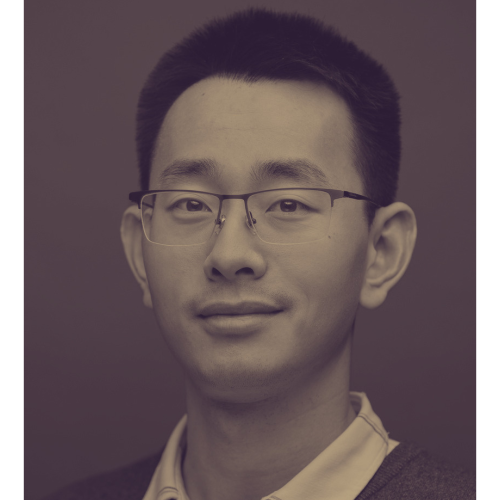
Ph.D. Yiwei Shang
Aarhus University, Denmark
In his own words
What first drew you to research?
“I would say it’s my interest in nature, the environment, and agriculture. I have always been curious about how agriculture can adapt to climate change and meet human needs in the future, and how we can make agricultural systems part of the solution to global warming.”
How did you land on the intersection of perennial cropping systems and soil carbon sequestration?
“The background of my PhD project was biorefinery, and I had been interested in soil organic carbon since my undergraduate studies. So, I wanted to combine them together. I noticed that perennial biomass crops have greater root systems and do not need tillage and resowing, which potentially indicates more organic input but less soil disturbance. This made me interested in their potential for SOC sequestration.
Perennial crop breeding is rapidly developing, from bioenergy crops to cereal crops, representing a promising direction for future agriculture. By evaluating their potential to sequester carbon in soil, we can better understand their role in climate mitigation and inform policymakers about how much they can contribute to future climate-smart cropping systems.”
Ten years is a long time to spend with one experiment. How has your view of agricultural sustainability changed over that time?
“Sustainability is a comprehensive concept. My understanding evolved from mainly focusing on yield and individual environmental indicators to taking a more holistic perspective at the system level. For example, changes in soil organic carbon should be assessed across the whole soil profile rather than simply focusing on the topsoil. Different sustainability indicators are closely linked, and improving one aspect may involve trade-offs with others. We may need to identify some priorities and find a balance among them.”
Your study found real discrepancies between the ESM and FD methods for measuring SOC, what’s your advice to other researchers navigating that?
“I think the key is to be transparent and consistent. When land-use conversion has occurred — for example, from grassland to arable land — or when the treatments differ significantly in soil bulk density, the equivalent soil mass approach is highly recommended. Ultimately, researchers should select the method that best fits their research context and objectives and always clearly report the details.”
Meet Yiwei at the conference
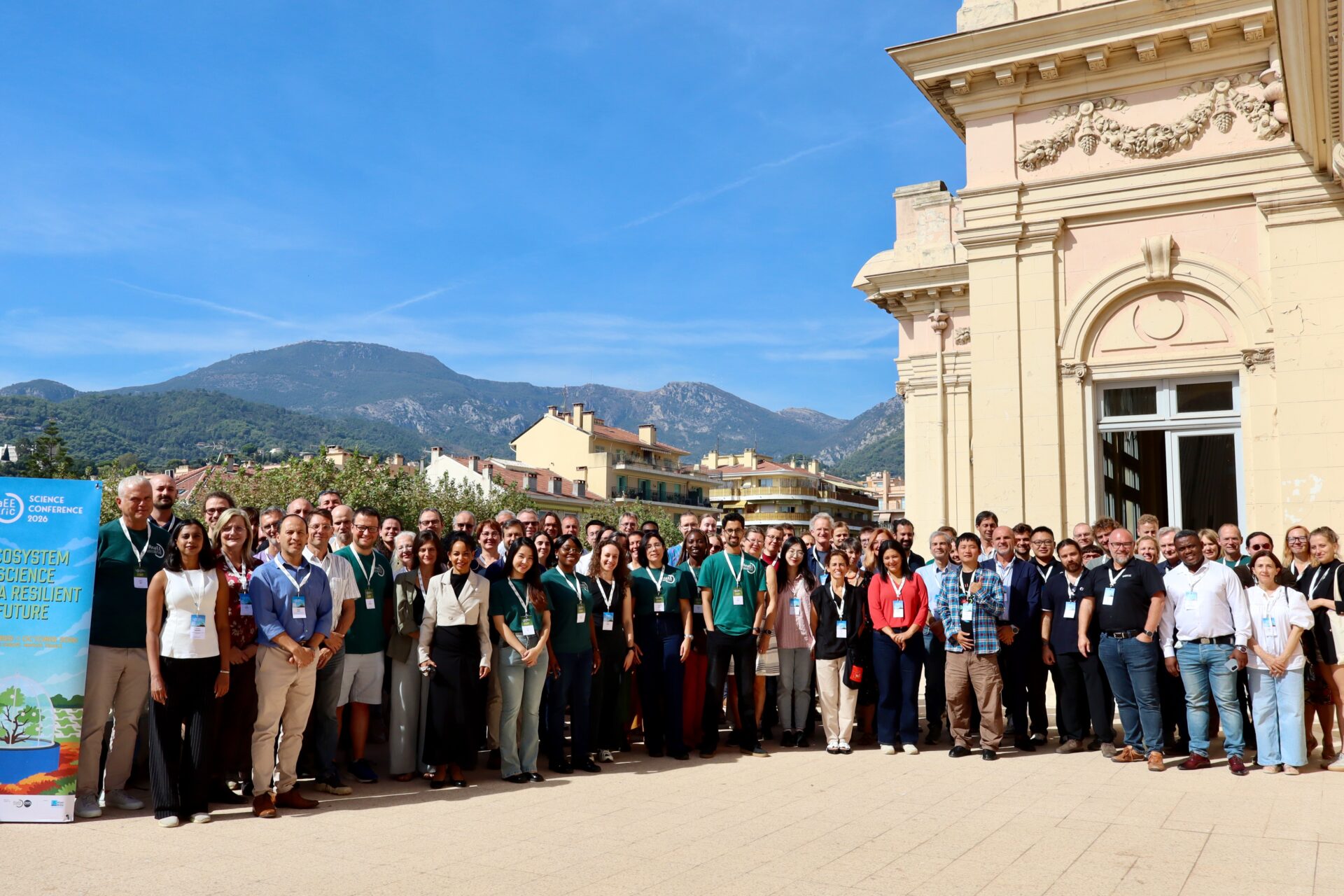
Yiwei will be joining us at the upcoming conference in Menton September 29, 2026, together with the award’s runner-ups, giving delegates the chance to meet the researchers behind this year’s most promising early-career work in person. If you’re working on long-term field experiments, soil science, or climate-smart cropping systems — or you’re simply curious where the field is headed — this is a great opportunity to connect with fellow experimental enthusiasts, ask questions directly, and build new collaborations.
Congratulations again to Yiwei Shang, our first-ever AnaEE Environmental Rising Star. We look forward to seeing where this research goes next.